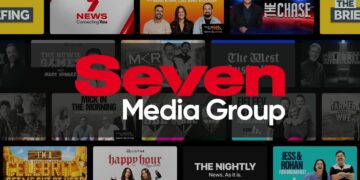





























Seven Media Group becomes official as AGM backs SMG ticker amid softer ad market – Southern Cross Media Group has formally changed its name to Seven Media Group Limited after shareholders overwhelmingly approved the rebrand at the company’s 2026 annual general meeting.
The legal name change took effect on Thursday, 5 November. The company’s ASX ticker will move from SXL to SMG when trading begins on Tuesday, 10 November 2026. Its corporate website has also moved to sevenmediagroup.com.au.
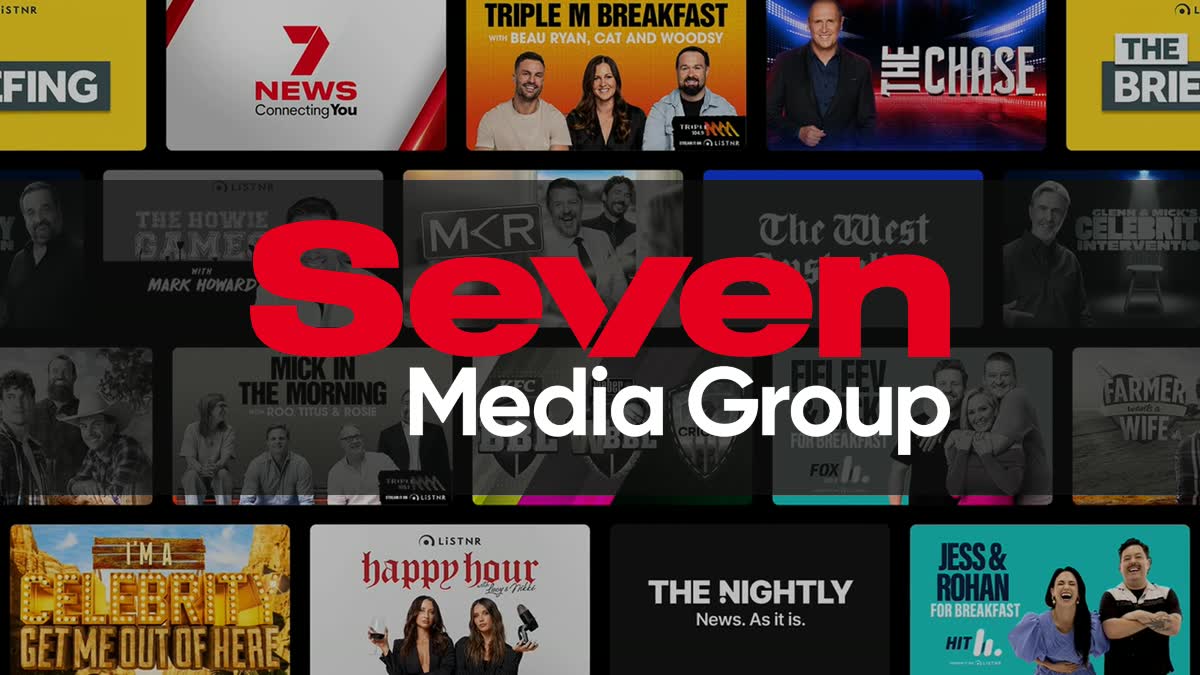
For audiences, the change is about the identity of the listed parent company rather than the services they use. Channel 7, 7plus, 7NEWS, Triple M, Hit, LiSTNR, The West Australian, The Nightly and PerthNow will retain their established consumer brands. The new name instead gives the merged television, audio, publishing and digital group one corporate identity.
Seven Media Group name wins decisive shareholder support
The name and constitution resolution received 97.56 per cent support on the poll, with 264.1 million votes in favour and 6.6 million against. The amended constitution now identifies the company as Seven Media Group Limited while retaining provisions connected with its broadcasting licences and ownership obligations.
The outcome completes a process first put to shareholders in the AGM notice. Southern Cross Media Group became the listed parent of the enlarged business after completing its acquisition of Seven West Media in January 2026. The combination brought the Seven Network and 7plus together with SCA’s radio and digital-audio operations, as well as Seven West Media’s publishing assets.
Chair Ryan Stokes told shareholders the identity was intended to reflect the combined company rather than replace the brands its audiences already know.
The new name reflects what the company now is: one company, with one strategy and one identity.
Ryan Stokes AO, Chair of Seven Media Group
Stokes said the group’s consumer brands would keep their names, mastheads and audience connections. He described the corporate name as the umbrella that brings those businesses together.
Advertising pressure weighs on first-quarter revenue
The AGM also delivered the first detailed trading update under managing director and chief executive Rohan Lund. Revenue in the first quarter of the 2027 financial year was below the comparable period, reflecting weaker advertising conditions from August and the end of Google news payments.
Television revenue declined year on year. Share gains associated with the Commonwealth Games and AFL finals partly offset a television advertising market that was down by a mid-single-digit percentage. Lower Google payments for news also reduced the comparison.
Audio revenue was broadly flat. Regional and digital growth helped offset weaker metropolitan and other revenue movements. Publishing revenue was also lower, mainly because of softer advertising, changes to the events schedule and the reduction in Google payments. Higher circulation and subscription income provided a partial offset.
Lund said management could not control the wider advertising market, but it could determine how the company responds.
We cannot control the advertising market. We can control the quality of our content, how well we serve customers, where we invest and how efficiently we operate.
Rohan Lund, Managing Director and Chief Executive Officer of Seven Media Group
The group said the advertising market remained short and volatile, with consumer and advertiser sentiment varying. Management has set the cost base on the assumption that the broader economy could deteriorate in the second half.
Cost reduction program tracks ahead of plan
Seven Media Group is progressing a $150 million cost reduction program, with the full benefit expected in the 2028 financial year. Lund told the AGM the company expected to exceed that target. First-quarter costs were already below the prior corresponding period despite the business absorbing one-off sporting event costs.
The program is part of a wider integration strategy built around reaching audiences across television, streaming, radio, podcasts, publishing and off-network digital platforms. Management wants advertisers to buy and measure campaigns across the portfolio through a more unified system, supported by first-party audience data.
The company is developing Phoenix Exchange as a connected trading platform. It is also using 7ID to improve its understanding of audience activity across brands. Lund said the aim was to make the group easier for advertisers to understand, buy and measure.
Seven Media Group said the merged portfolio reaches more than 20 million Australians each month. Almost 16 million Australians were registered users of 7plus at the time of the addresses, while LiSTNR had 2.7 million registered users. The company also highlighted a 9.5 per cent year-on-year increase in Total TV audiences reported at its recent upfront presentation.
FY26 result remains the financial starting point
The board acknowledged that the 2026 financial result fell short of expectations. On a pro forma basis, FY26 revenue was $1.87 billion. EBITDA was $192 million excluding onerous contracts and $200 million including them.
Net profit after tax was $10 million, down $13 million, while net debt stood at $363 million. Reported leverage increased to 1.8 times. The group has a new $569 million cross-company syndicated facility in place.
Management said the pathway to better shareholder returns depends on completing the integration, reducing costs and turning audience-share gains into stronger advertising revenue. The company will also seek its full share of funding available under the News Bargaining Incentive legislation.
Directors returned as separate challenges fail
All board-endorsed resolutions passed at the AGM. Marina Go was re-elected with 75.58 per cent of votes cast on the poll in favour. A separate, non-board-endorsed resolution seeking her removal failed, with 75.29 per cent voting against it.
RelatedPosts



Shareholders also elected Ryan Stokes, Teresa Dyson, Mark McGowan, Cathy O’Connor, Karen Stocks and Sylvia Wiggins. Each received more than 94 per cent support. The remuneration report passed with 97.63 per cent support, while the proposed grant of performance rights to Lund under the FY27 long-term incentive plan received 98.81 per cent.
A non-board-endorsed proposal to elect shareholder activist Stephen Mayne as a director was rejected. Only 2.87 per cent of votes cast supported the resolution.
The board now comprises eight directors, six of them independent non-executive directors. Cathy O’Connor serves as lead independent director, a role the company says is important because Stokes is also connected with substantial shareholder SGH.
What the change means for viewers and investors
The immediate public-facing change is limited. Channel 7, 7plus, Triple M, Hit, LiSTNR and the group’s publishing brands continue under their existing names. Seven Media Group is the corporate identity above those businesses.
Investors will see the more practical change when the ASX code becomes SMG on 10 November. The group’s registered company number and underlying operations do not change because of the rebrand. The updated constitution principally records the new legal name while preserving the governance and broadcasting-ownership framework applying to the company.
For the earlier background, read TV Central’s report on the proposed Seven Media Group name and SMG ticker. The official Seven Media Group website now brings together information about the company’s television, audio, publishing and digital portfolio.