

































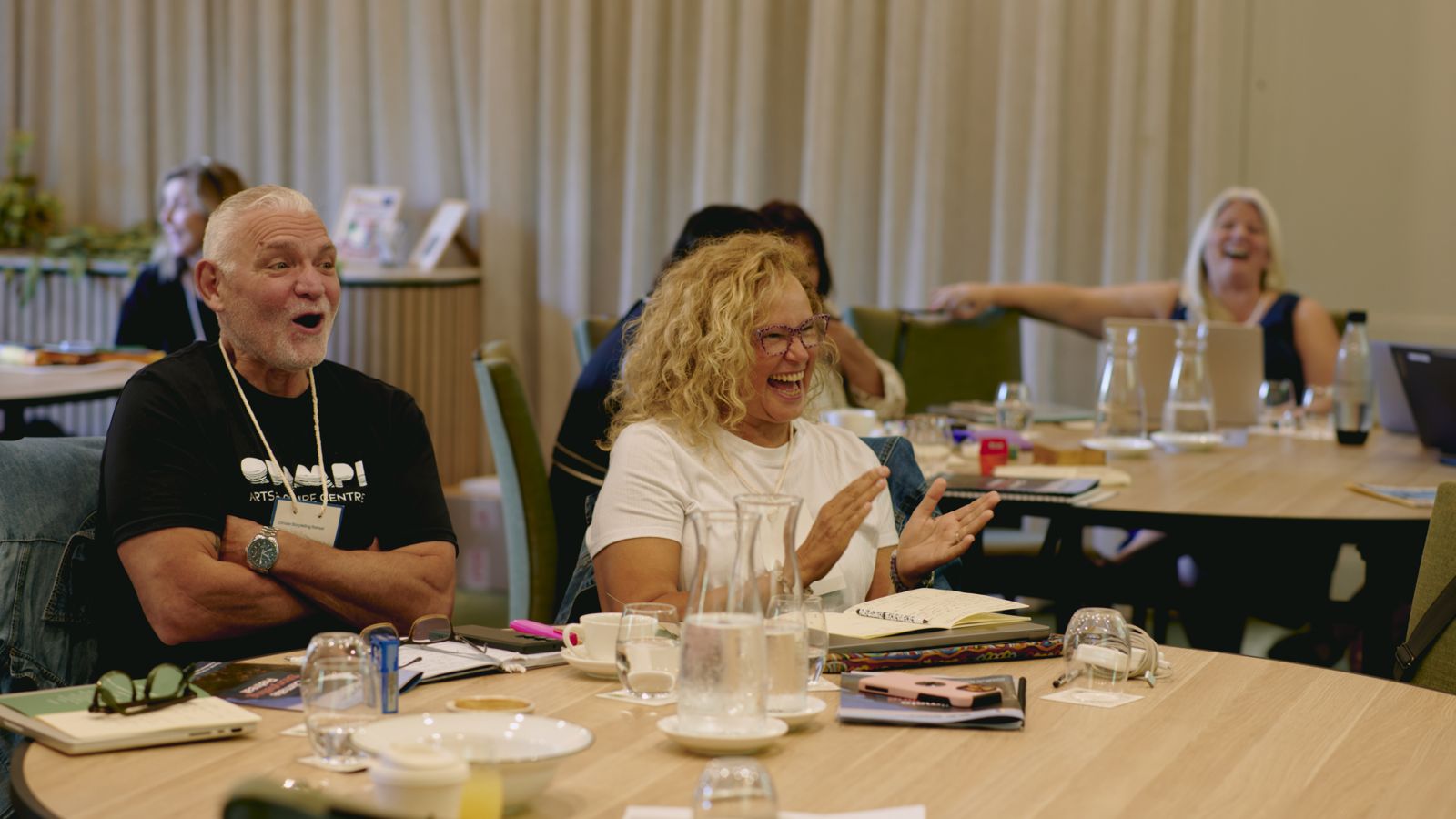


Sustainable Screens Australia launches climate storytelling retreat – Screenwriters, producers and directors gathered on Bundjalung Country in Byron Bay for Sustainable Screens Australia’s first Climate Storytelling Retreat. The two-day event brought screen practitioners together with scientists and researchers to explore how film and television can tell stories about climate that audiences want to watch.
The focus was on creative decisions writers can make long before a production starts shooting. Those decisions ranged from how a character responds to a changing landscape to what a police procedural or romance might show about the world its characters live in. The retreat also gave participants time to consider how science, audience research and a relationship to Country could shape those choices.
Sustainable Screens Australia executive director Maree Cochrane said she was seeing an appetite for climate storytelling in Australia and overseas.
Climate storytelling is at a turning point.
Maree Cochrane, Executive Director, Sustainable Screens Australia
Audiences care about seeing their world reflected authentically on screen. Climate is something we all experience, and we are already seeing climate storytelling move into mainstream entertainment. This will have a massive impact on how investments, commissions and partnerships are made.
Maree Cochrane, Executive Director, Sustainable Screens Australia
Country as a character
Actor, writer, director and producer Leah Purcell and executive producer Bain Stewart co-founded Oombarra Productions. At the retreat, they explained why they often talk about Country when discussing the subject. Purcell drew on The Drover’s Wife to describe how the land revealed the story to her. The pair also spoke about Oombarra’s cultural consultancy and asked storytellers to consider their own relationship to Country.
Victor Steffensen, an author and founder of the Living Knowledge Network, discussed how Indigenous fire practice and reading Country can heal landscapes while rebuilding knowledge, culture and community. He urged participants to think across generations and plan for 500 years. Filmmaker Dr Samantha Lang explored stories where the natural world takes the lead, asking whose perspective goes missing when every story centres on people.
Lessons from BBC drama, audience research and satire
UK screenwriter and executive producer Kayleigh Llewellyn took participants through the making of The Dream Lands. The SISTER series adapts Rosa Rankin-Gee’s novel for BBC One and BBC iPlayer. Its central character, Chance, is trying to keep her family afloat in a coastal town in 2039. Llewellyn spoke about writing with honesty, emotion and humour, and creating characters audiences can connect with personally.
Climate Spring founder and executive director Lucy Stone introduced the Two-Loop model. She asked participants to map their characters against the roles people play as old systems decline and new ones emerge. The exercise offered ways to tell stories about who has the power to act, who is held accountable and how communities might rebuild.
Dr Philipe Bujold, a research fellow at BehaviourWorks Australia at Monash University, put the focus on audience habits. He said people who are less concerned about climate can turn away from news and rely more on entertainment for a picture of the world. In his view, screen stories can prepare audiences for change, and leaving climate out also sends a message.
Hollywood Climate Summit executive director Heather Fipps and Good Energy vice-president of stories Carmiel Banasky offered writers two questions: does climate change exist in the world of the story, and does a character know about it? Their teams are developing tools for procedurals and plan to turn to romance next. The program also featured filmmaker, writer and screen executive Loani Arman and University of Melbourne climate scientist Dr Linden Ashcroft.
Comedian and journalist Dan Ilic recalled crowdfunding satirical billboards while in lockdown in the lead-up to COP26. One appeared in New York’s Times Square and mocked Australia’s climate ambitions with a slogan about net zero by 2300. Ilic used the campaign to show how putting a fact alongside a joke can draw attention to an issue.
What Sustainable Screens Australia plans next
Cochrane said the retreat was the first event under Sustainable Screens Australia’s wider Climate Storytelling Strategy.
Our Climate Storytelling Retreat was the first initiative in SSA’s wider Climate Storytelling Strategy, which is mobilising the industry around climate in Australian screen stories. This will support the industry to have the skills and confidence to bring climate on screen as both a smart creative and commercial choice.
Maree Cochrane, Executive Director, Sustainable Screens Australia
Cochrane also reflected on why bringing together people from different parts of the screen industry mattered, and what they took away from the sessions.
What made the retreat so special was the group of people we brought into the room. They have the craft, experience and instinct to accelerate climate storytelling in Australia.
Maree Cochrane, Executive Director, Sustainable Screens Australia
The breadth and depth of insights that emerged from the two days was profound. The learnings touched on so many things including a desire to forge deeper connection to Country, choosing better ways to travel, gaining more hope, and making different choices around storylines. It was clear that people’s perspectives changed and they were deeply moved by the experience, and excited to be part of this growing screen community.
Maree Cochrane, Executive Director, Sustainable Screens Australia
The organisation plans to run an online professional development program called Changing Narratives in partnership with Climate Spring. It also plans to offer a funded pitching opportunity. Minderoo Pictures and Screen NSW are among the members and funders supporting the climate storytelling program.
The next phase gives writers and producers two different ways to take part. The online program will extend the professional development beyond the people who met in Byron Bay. The pitching opportunity, meanwhile, will give practitioners a chance to put new ideas for screen stories forward.
Catch up on TV Central’s coverage of Leah Purcell and the AACTA Festival. Find upcoming Sustainable Screens Australia events and workshops.