


































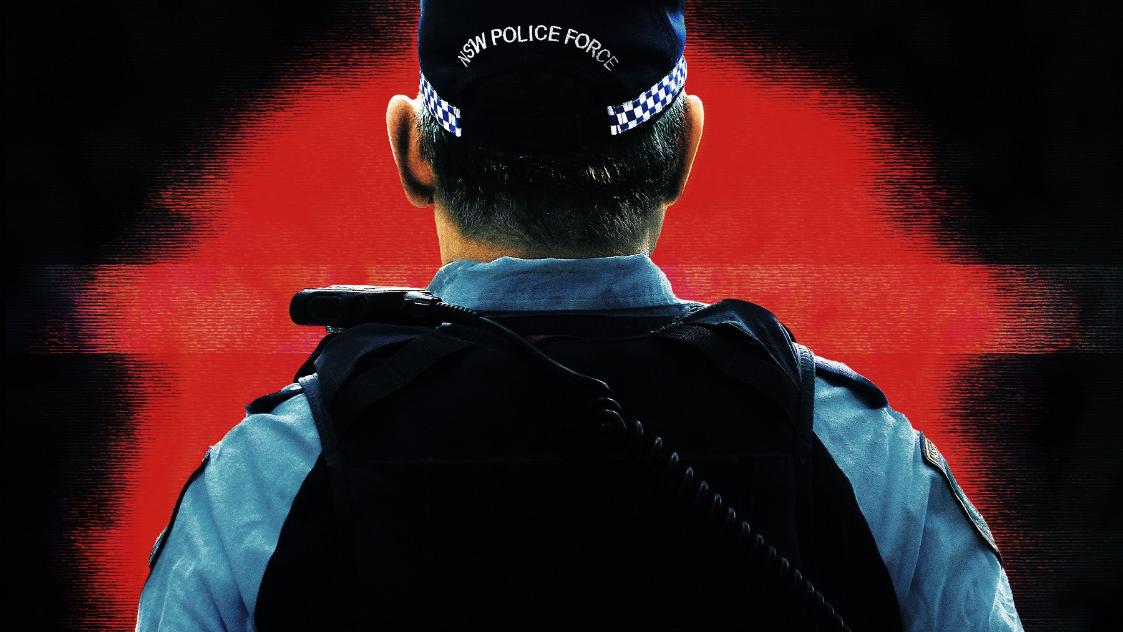

Four Corners on ABC and ABC iview S65E15 Brutal Force – Every day, police officers are expected to make split-second decisions in situations involving violence, mental illness, alcohol and fear.
But what happens when police themselves are caught on camera doing the wrong thing, and the system of accountability fails to deliver clear answers?
In a powerful Four Corners investigation, reporter Dylan Welch examines troubling cases of alleged and proven police misconduct in New South Wales, where confronting body-worn video, CCTV and mobile phone footage has exposed excessive force and questionable police statements.
The program investigates a police accountability system largely hidden from public view, where complaints, internal investigations and secret settlements can leave victims and the public without clear answers.
Through strong personal accounts and shocking footage, the program reveals the lasting human impact of police misconduct, and the long fight for accountability.
Four Corners hears from lawyers, former police, criminologists and alleged victims who say too many cases are settled confidentially, leaving the public with little information about whether officers were disciplined, moved, suspended, sacked or charged.
The investigation tackles a critical question: when police abuse their power, who holds them to account?
Four Corners on ABC and ABC iview – Monday 1 June at 8.30pm
Media Release – ABC
TV Central ABC content HERE
Four Corners on ABC and ABC iview S65E15 Brutal Force







My Experience with Police Accountability in NSW
In 2008, I was involved in a legal case concerning an incident with a police officer in Blacktown, NSW.
My experience left me with serious concerns about police accountability and the fairness of the complaint process. I believed I had been assaulted by a police officer and attempted to pursue the matter through the court system. However, I felt I was never given a genuine opportunity to fully present my side of the story.
During the process, I was advised that continuing the case could take years, involve significant costs, and have a major impact on my family. Eventually, I withdrew my challenge and accepted an outcome that I did not believe reflected what had actually happened.
More than 17 years later, the experience still affects me. What troubles me most is not only the incident itself, but the feeling that ordinary citizens face enormous obstacles when trying to challenge police conduct or seek an independent review.
I am sharing this because the question raised by Four Corners is an important one: when members of the public believe police have acted improperly, how can they be confident that their complaints will be investigated fairly and independently?
For personal safety and privacy reasons, I prefer not to publicly disclose further identifying details at this stage.