









































Spend Masks Risks for Australian Stories, Says Screen Producers Australia – New figures from Screen Australia’s Drama Report 2024/25 show total drama production expenditure in Australia reached $2.7 billion, a 43% increase on the previous year. However, Screen Producers Australia (SPA) is cautioning that the headline growth is being driven largely by international activity – while the volume of Australian stories continues to decline.
Of the total growth, $678 million came from international production, with $1.6 billion (60%) now spent on international stories, representing a 72% increase year-on-year off the back of an uncharacteristically small result from the previous year. As a result, local productions now account for less than half of total expenditure.
At the same time, the number of Australian titles entering production fell from 89 to 71 – a 20% decrease which is a pattern that reinforces industry concerns that fewer local stories are being made despite increased overall spend meaning a continuing reduction in work for key creative roles in our industry and hours of content for audiences.
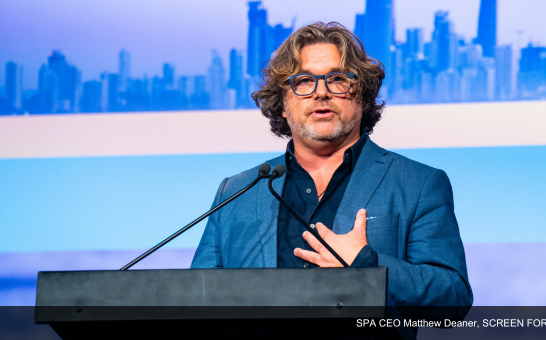
“These figures can give a headline appearance of strength, but they mask a more fragile reality for Australian storytelling,”
– said SPA CEO Matthew Deaner.
“In 2024-25 we produced fewer Australian titles, across fewer hours removing many of the opportunities for work in our industry. In the projects that have been brought to the screen, there has been a continuing pattern of producers’ intellectual property rights being removed or devalued in commissioning deals – something which isn’t captured in this report costs. All of this points to structural challenges for our sector and an absence of strong foundations to build opportunities in the future.”
“The $29m drop in investment on Australian screen stories on TV and VOD platforms from $717m to $688m highlights the critical importance of building foundational and ongoing stability for our industry through such as the Australian streaming investment regulation and the increased funding support for the ABC – both of which were announced last week,”
– Mr Deaner said.
“There must be continuing efforts to buttress our industry against this downward trajectory for local content, and we will continue to work with Government to address the gaps and risks in and for our industry across a number of policy levers.
Across every major platform, the report reveals a persistent pattern of declining production volume despite stable or rising expenditure:
- $654 million was spent on 32 Australian general TV and VOD drama titles, a 1% decrease on 2023/24, alongside a clear decline in both the number of titles and total hours produced.
- Free-to-air TV category experienced a 14% decline in expenditure, with titles dropping from 16 to 14 and total hours falling from 276 to 191.
- Subscription TV and SVOD expenditure rose 5% to $492 million, yet the number of titles fell from 28 to 18, and hours declined from 135 to 105. Over the same period, the average budget per hour surged 44%, from $3.6 million to $5.1 million, driven by a small number of high-end series and feature-length projects.
- Australian children’s television and VOD suffered a 41% drop in expenditure to $34 million, with titles reducing from 7 to 5 and total hours falling 38% to just 21 hours.
- Australian theatrical feature film expenditure increased 76%, yet the number of titles still fell from 38 to 34.
“While it is challenging to always get a clear handle on patterns given the lumpy nature of our industry’s project work, what this does show is that there are fewer opportunities for different parts of our industry to helm different projects or episodes and as a consequence, fewer pathways for emerging creatives, and fewer distinct Australian voices on screen,”
– said Deaner.
SPA warned that escalating per-hour production costs are now fundamentally reshaping the commissioning landscape – particularly in television and streaming.
“When the average TV and SVOD budget per hour increases in this way the immediate consequence is fewer projects being greenlit,”
– said Deaner.
“High-end production is important, but it cannot come at the expense of a broad, sustainable slate of Australian stories.”
SPA also highlighted a critical limitation of the report: the absence of data on ownership of intellectual property and long-term rights retention.
“Expenditure does not equal resilience,”
– said Deaner.
“If Australian producers are not retaining meaningful rights in the stories they create, then this level of production activity does not translate into long-term business sustainability, reinvestment, or cultural sovereignty.”
As global financing models increasingly require producers to trade away ownership to secure production funding, SPA said rights and IP control are now central to understanding the real health of the sector – yet remain invisible in current reporting.
SPA warned that while the topline production spend appears strong, the underlying trends point to an industry increasingly dependent on international activity, producing fewer Australian stories, and operating under intensifying cost pressure.
“Record expenditure alongside falling local output creates a false sense of stability,”
– Deaner said.
“If Australia is serious about maintaining a sovereign, resilient screen industry, public policy must look beyond headline spending and address volume, ownership, and long-term value for Australian producers.”
Media Release – SPA
Link to SPA HERE
TV Central Screen Producers Australia content HERE
Spend Masks Risks for Australian Stories, Says Screen Producers Australia